

The Upsides and Downsides of Composite Decking
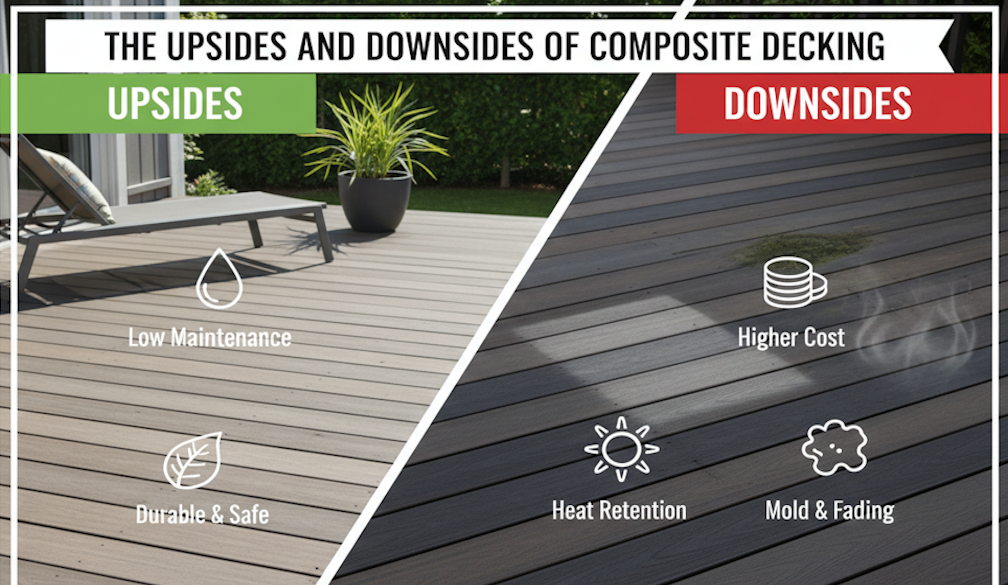
If you’re planning to upgrade your outdoor area into a space for relaxing and entertaining, decking is one of the most flexible solutions available. With so many materials on the market, selecting the right one can be challenging. Composite decking has become increasingly popular, but it’s important to weigh both its advantages and limitations before deciding if it suits your needs.
This guide explores the key benefits and potential drawbacks of composite decking, particularly for homeowners considering it for their outdoor spaces.
Key Takeaways
- Composite decking is built for durability and longevity, with strong resistance to weather, mould, insects, and general wear.
- It requires very little upkeep compared to timber, with no need for ongoing staining or sealing.
- It is resistant to staining, helping maintain a clean and polished appearance.
- It is often manufactured using recycled materials, supporting more sustainable building practices.
- It provides a smooth, splinter-free surface, making it suitable for families and pets.
What is Composite Decking?
Composite decking is made by combining wood fibres with recycled plastics to create a strong and stable material. It delivers the visual appeal of timber while offering improved performance in outdoor conditions. Like any material, however, it comes with both benefits and trade-offs.
Benefits of Composite Decking
Performance in Changing Weather
Outdoor materials are constantly exposed to the elements, especially in climates with varying temperatures and rainfall. Composite decking is engineered to handle these conditions, resisting fading, moisture damage, mould, and warping. This makes it a reliable choice for long-term outdoor use.
Low Maintenance
One of the main reasons homeowners choose composite decking is the minimal upkeep required. Unlike timber, which needs regular sanding, sealing, and staining, composite boards typically only need occasional cleaning. This reduces the time and effort required to keep the deck looking its best.
Resistance to Stains
Composite decking is designed to handle everyday use, including spills from food and drinks. Its stain-resistant surface helps maintain a clean appearance, making it ideal for outdoor entertaining areas where spills are common.
Design Flexibility
Composite decking is available in a wide range of colours and finishes, allowing homeowners to achieve a consistent and tailored look. Whether aiming for a modern or more traditional style, there are options to suit different design preferences. Many homeowners source the highest-quality composite deck boards to ensure both aesthetic appeal and long-term performance.
Sustainable Option
Many composite products are made using recycled materials, such as reclaimed timber fibres and plastics. This reduces the need for new raw materials and helps minimise waste, making it a more environmentally conscious choice compared to traditional timber decking.
Durability
Composite decking is built to withstand heavy use and exposure to outdoor conditions. It resists scratches, moisture, and insect damage, helping it maintain both its structure and appearance over time. For those seeking the highest-quality Sydney composite decks, durability is often a key deciding factor.
Safe for Families
Unlike timber, composite decking does not splinter, making it a safer option for households with children or pets. Its smooth surface allows for comfortable barefoot use, creating a more user-friendly outdoor environment.
Drawbacks of Composite Decking
Higher Initial Investment
Composite decking generally comes with a higher upfront cost than traditional timber. While this can be a consideration, many homeowners find that reduced maintenance and longer lifespan help balance the initial expense over time.
Potential for Fading
Although designed to resist UV damage, some composite decking may experience slight fading after prolonged sun exposure. This is more noticeable with darker tones, particularly in areas with strong sunlight.
Limited Changes After Installation
Once installed, composite decking cannot be easily altered in terms of colour or finish. Unlike timber, it cannot be sanded back or repainted, so choosing the right look from the outset is essential.
Impact on Property Value
While a deck can enhance the usability of a home, the material itself does not always significantly influence resale value. Whether the deck is timber or composite may not be a deciding factor for buyers.
Less Natural Feel
Although modern products closely replicate timber, some homeowners still prefer the authentic look and texture of natural wood. Even premium options may not fully match the character of real timber.
Our Most Popular Pioneer Decking Styles
Products such as Pioneer deck boards are designed to replicate the natural appearance of timber while delivering consistent performance and durability.
Conclusion
Choosing the right decking material ultimately comes down to your priorities. If you value low maintenance, durability, and long-term performance, working with an experienced Australian composite deck company can help you find a solution that enhances both your outdoor space and your overall lifestyle.


